The next chapter of digital value exchange requires more than speed; it demands cryptographic durability, regulatory readiness, and a connectivity model that scales across borders and industries. That is the promise of post-quantum, privacy-preserving Web3 infrastructure—a stack engineered for real-world finance, data sharing, and multi-party workflows. Invest net stands at the intersection of these needs, delivering decentralized connectivity, programmable privacy through zero-knowledge (zk) proofs, and a blockchain system that aligns with institutional governance and compliance. Whether orchestrating settlement between counterparties, securing multi-cloud data collaboration, or enabling verifiable credentials, the platform brings together cryptography, networking, and policy controls designed for the age of regulated decentralization.
Why post-quantum and privacy-preserving design are the new fundamentals
Traditional public-key cryptography, mostly based on elliptic curves, underpins everything from wallets to cross-chain bridges. The advent of large-scale quantum computing threatens these schemes, making post-quantum protections essential—not as a future add-on, but as a baseline. A post-quantum approach protects long-lived data and assets against “harvest-now, decrypt-later” strategies, where adversaries capture encrypted traffic today to break it in the future. By integrating quantum-resistant primitives into transaction signing, network messaging, and identity proofs, Invest net reduces systemic risk and supports cryptographic agility as standards evolve. This is particularly important for institutions with long retention policies and high-value data, such as banks, healthcare systems, and telecoms.
Privacy is the second pillar. Institutions need confidentiality without sacrificing verifiability. Zero-knowledge proofs enable selective disclosure—proving a statement is true (for example, a transaction adheres to sanctions screening or a customer is accredited) without revealing the underlying data. This approach transforms compliance from an off-chain, trust-based process into an on-chain, verifiable workflow. It aligns with frameworks like GDPR’s data minimization and supports regulated markets where auditability coexists with strict privacy controls. On Invest net, zk-proofs make possible private transfers, confidential order flow, and identity attestations that are demonstrably policy-compliant.
Finally, decentralized connectivity matters because enterprise-grade Web3 cannot rely on single chokepoints. Distributed networking creates resilience, censorship resistance, and interoperability. Nodes can be deployed across clouds and regions, with policy-aware peering and fine-grained access controls. This ensures that counterparties can connect securely, enforce rules, and exchange proofs without a central broker. Built from first principles, Invest net unifies post-quantum security, zk-enabled privacy, and decentralized architecture into an institution-ready blockchain system that scales from pilot to production.
Inside the architecture: cryptography, connectivity, and policy controls
A modern institutional Web3 stack needs to be modular, standards-aware, and hardened from the ground up. At the cryptographic layer, Invest net adopts quantum-resistant signature schemes and key exchange mechanisms to protect identities, transactions, and inter-node communications. Hybrid modes can combine classical and post-quantum algorithms to smooth migration and ensure compatibility with legacy systems. This agility allows security teams to rotate keys, segment risk domains, and meet evolving compliance guidance without redesigning the entire workflow. The cryptographic layer also feeds into the proof system: zero-knowledge circuits encode business rules—KYC checks, portfolio thresholds, or data-use constraints—and generate succinct proofs that validators can verify quickly.
The privacy fabric supports a spectrum of zk-techniques, from range proofs and membership proofs to policy attestations and confidential state transitions. Developers can map typical enterprise rules into reusable circuits: prove that an asset is held within a whitelist, verify that a portfolio meets diversification constraints, or attest that a credential is current without revealing personally identifiable information. Importantly, these circuits are composable, enabling multi-party workflows where each participant reveals only what is required. When combined with secure enclaves or hardware-backed key management, institutions can isolate sensitive operations while maintaining the verifiability of outcomes on-chain.
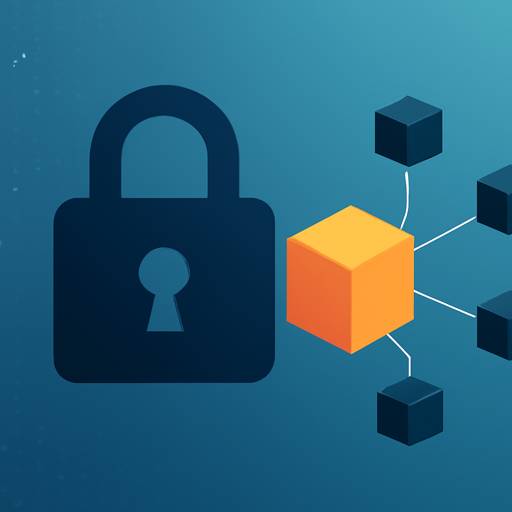
Beneath the application layer is the decentralized connectivity plane. Peers discover each other securely, exchange data through authenticated channels, and make state changes that are anchored to a tamper-evident ledger. This model supports high-throughput rollup strategies and data-availability mechanisms that keep costs predictable while preserving security guarantees. For cross-domain operations, interoperable messaging carries proofs—not just messages—so counterparties can verify claims without trusting the sender. Network governance defines who can deploy nodes, publish circuits, or update policies, aligning with enterprise change-management processes. Role-based permissions, rate limits, and jurisdiction-aware routing help organizations operate across regions while honoring local rules and minimizing data exposure. The result is a Web3 infrastructure that blends cryptographic assurance, operational control, and open composability.
Use cases and adoption playbooks for regulated markets
Capital markets settlement: Two counterparties can net trades across a permissioned environment, generate zk-proofs that all orders pass sanctions and counterparty risk checks, and anchor finality to a public verification layer. Post-quantum keys protect long-term transaction histories, while privacy preserves competitive order flow. Settlement finality is auditable without disclosing order books or sensitive client details.
Supply chain and logistics: Manufacturers and logistics providers exchange verifiable milestones—origin, custody transfer, environmental impact—without revealing proprietary volumes or supplier pricing. A zero-knowledge policy can prove that a component meets a sustainability threshold or origin rule of a trade agreement. Post-quantum signatures prevent retrospective tampering, ensuring that certificates remain trustworthy years into the future.
Healthcare and research data collaboration: Hospitals and research institutes can jointly compute on encrypted datasets, publishing proofs that a study followed privacy protocols or that a consent model was honored. Only the results and attestations are shared on-chain, complying with privacy requirements while enabling cross-institutional analysis. The distributed network design allows data to remain within jurisdictional boundaries while preserving global verifiability.
Telecom and IoT: Millions of devices require identity attestation, secure updates, and tamper-evident telemetry. Post-quantum identity schemes future-proof device onboarding, while decentralized connectivity mitigates single points of failure. Service providers can issue proofs that a device meets compliance standards or that a network slice adheres to bandwidth guarantees, all without revealing customer data.
Adoption roadmap for institutions: Start by mapping cryptographic posture—identify long-lived data and keys at risk of future quantum attacks. Introduce hybrid key management so critical workflows can migrate without service disruption. Next, codify compliance rules into zero-knowledge circuits: sanctions filters, investor accreditation, market access criteria. Run parallel pilots that demonstrate verifiable compliance, then integrate with existing custody and treasury systems using standardized interfaces. Deploy nodes across multiple regions to satisfy data residency, enabling policy-aware routing and selective disclosure. Finally, define governance—who can upgrade circuits, rotate keys, or onboard participants—to mirror existing change and access controls. This playbook aligns technology with internal risk frameworks and external regulation, producing an institution-ready blockchain footprint that scales responsibly.
Across these scenarios, the consistent advantages of a post-quantum, privacy-first approach are clear: reduced compliance friction through verifiable policies; long-horizon protection of transaction archives and credentials; and decentralized resilience that supports cross-border operations. By unifying decentralized connectivity with programmable privacy and cryptographic agility, Invest net equips enterprises to move beyond proofs of concept and operate with confidence in production—where uptime, auditability, and security are non-negotiable.

Casablanca chemist turned Montréal kombucha brewer. Khadija writes on fermentation science, Quebec winter cycling, and Moroccan Andalusian music history. She ages batches in reclaimed maple barrels and blogs tasting notes like wine poetry.